
If you have been watching your organic search traffic over the last couple of years GEO vs SEO guide 2026 , you have likely noticed a massive shift. The familiar ten blue links have been pushed further and further down the page. In their place sits a dynamic, conversational, and highly detailed AI answer.
The old SEO is dying; here is what’s replacing it.
Welcome to the era of Generative Engine Optimization. Ranking #1 organically doesn’t mean what it used to because being the first blue link no longer guarantees the most visibility. Today, visibility belongs to the creators who are sourced, cited, and recommended directly inside Google’s AI Overviews (formerly the Search Generative Experience, or SGE).
As a creator, marketer, or business owner, you have a choice: you can fight the algorithm, or you can adapt and become the foundational knowledge that feeds it. As a mentor in this space, I want to walk you through exactly how to adapt. Welcome to the definitive GEO vs SEO guide 2026.
How to Start an AI Newsletter Side Hustle in 2026
The Shift: Why “Ranking #1” Has Changed
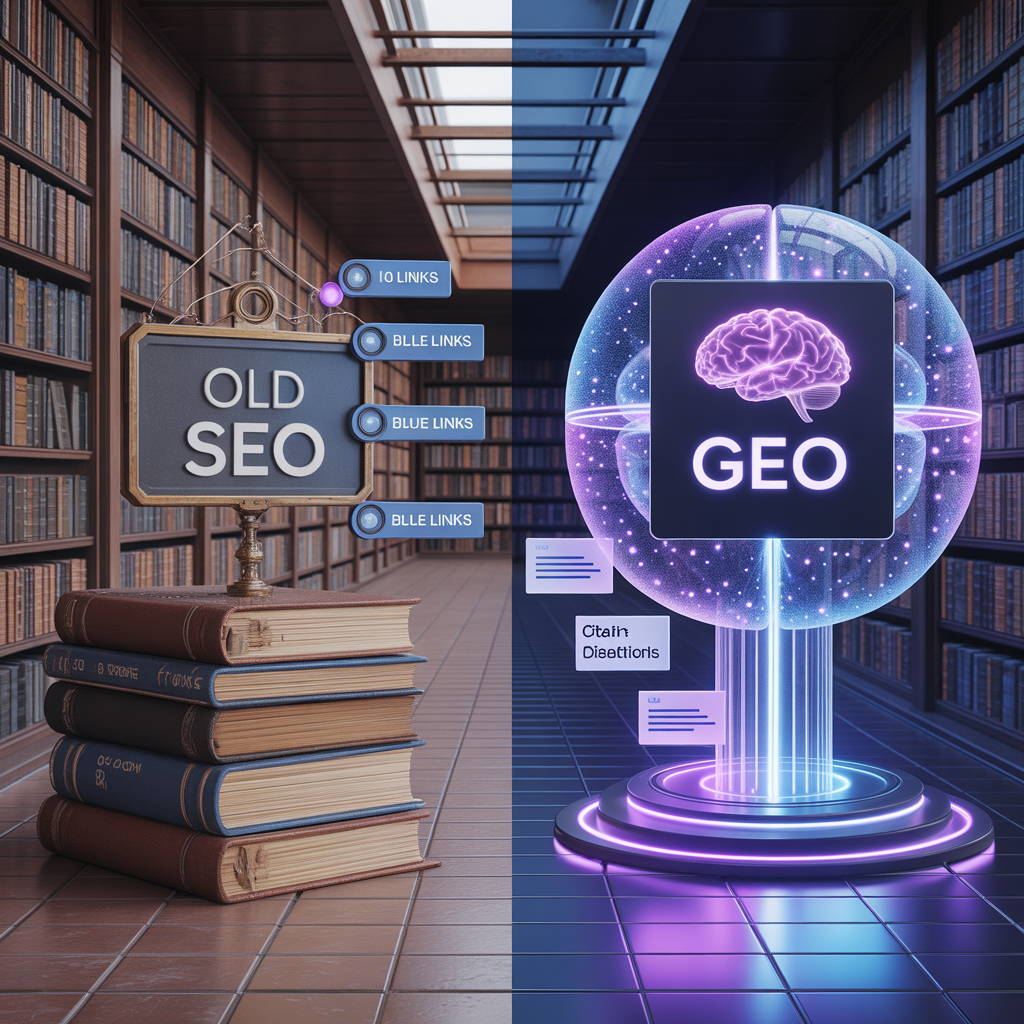
In the past, Google was a librarian. You asked a question, and it handed you a list of books (websites) where you could find the answer. Today, Google is an expert consultant. You ask a question, and it reads the books for you, synthesizes the information, and gives you a direct, conversational answer, citing its sources with small link cards.
If your content isn’t being cited in that AI Overview, you are virtually invisible to a large segment of your audience. The goal is no longer just driving a click; the goal is becoming the AI’s trusted reference material.
Defining GEO: What is Generative Engine Optimization?
GEO (Generative Engine Optimization) is the process of optimizing web content to be easily parsed and cited by AI-driven search engines like Google AI Overviews. It focuses on clarity, entity relevance, and modular structure rather than traditional keyword density.
Generative Engine Optimization (GEO) is the practice of optimizing your content so that Large Language Models (LLMs) and search generative engines can easily understand, trust, and pull your information into their direct answers.
In this GEO vs SEO guide 2026, we must first unlearn bad habits. Traditional SEO often relied on keyword density, backward-engineered word counts, and writing for algorithmic crawlers. GEO is fundamentally different. It requires writing for an AI that mimics human comprehension. The AI doesn’t care how many times you used a keyword; it cares if your sentence is the most clear, factual, and authoritative answer available.
Invideo AI vs Canva Magic Video: The Best YouTube Tool in 2026?
To understand the paradigm shift, look at this Key Differences table:
GEO vs. SEO: Key Differences in 2026
| Feature | Traditional SEO (The Old Way) | GEO (The 2026 Way) |
| Primary Goal | Rank #1 in the blue links to get clicks. | Be cited in the AI Overview as a trusted source. |
| Core Focus | Exact-match keywords and search volume. | Entities, topics, and contextual relevance. |
| Content Structure | Long, flowing narratives to keep users on-page. | Modular, bite-sized blocks that AI can easily extract. |
| Authority Signal | Backlinks from high Domain Authority sites. | Brand mentions, Knowledge Graph presence, and E-E-A-T. |
| Data Usage | Compiling existing information from competitors. | Publishing original data and unique personal experiences. |
The 3 Pillars of GEO
To thrive in this new landscape, your content strategy must be built on three non-negotiable pillars. As we outline in this GEO vs SEO guide 2026, adapting to these pillars is what separates the invisible from the highly cited.
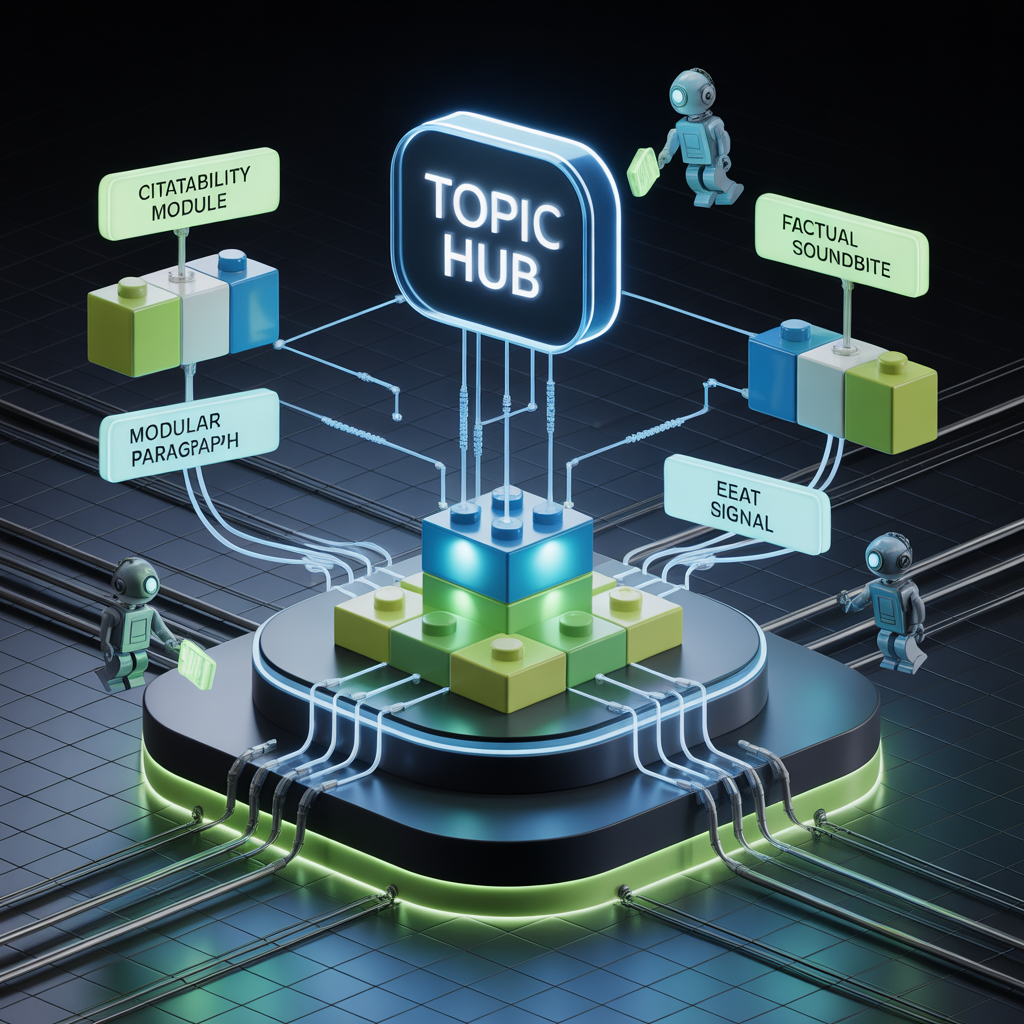
1. Citatability: Writing for the AI “Quote”
Large Language Models are prediction engines. When they construct an AI Overview, they look for high-confidence, definitive statements. If your writing is fluffy, passive, or overly complex, the AI will skip over it.
To be “citatable,” you must write with absolute clarity. Use strong, declarative sentences. Instead of saying, “It seems like a lot of people think that the best time to plant tomatoes might be right after the last frost,” you should say, “The optimal time to plant tomatoes is immediately following the final spring frost.” Give the AI a clear, factual soundbite that it feels confident repeating to a user.
2. Entity-Based SEO: Topics and Experts Over Keywords
Google no longer reads strings of letters; it understands “things.” These things are called Entities. Google’s Knowledge Graph connects entities to understand relationships. For example, it knows that “espresso,” “barista,” “portafilter,” and “crema” are all related to the entity of “Coffee.”
You can no longer stuff a keyword into a header and expect to rank. You must establish topical authority. This means comprehensively covering all the sub-entities related to your topic. Furthermore, you are an entity. Google is looking at your author bio, your social profiles, and your mentions across the web to verify that you are a legitimate expert in your niche.
3. Modular Content: Building Blocks for AI
AI does not read your blog post from top to bottom like a novel. It parses your page looking for specific chunks of data. Therefore, you must build your content modularly.
Think of your article as a collection of independent Lego blocks. Use clear H2 and H3 headings. Break up long paragraphs. Use bulleted lists, numbered steps, and bolded terms. Each section of your article should be able to stand on its own and make perfect sense if an AI pulls it out of context and places it into an Overview.
How to Build a $5,000/Month Faceless YouTube Channel with Ai Sora 2 and ElevenLabs
Step-by-Step Optimization for 2026
Theory is great, but execution is what gets results. A core lesson of any comprehensive GEO vs SEO guide 2026 is actionable implementation. If you want Google’s AI to cite you, follow this structure.
Step 1: The Direct Answer Block (The 40-60 Word Rule)
Immediately following every H2 or H3 in your article, provide a direct, concise answer to the implied question in that heading. Keep this answer between 40 and 60 words. Why? Because this is the exact length that LLMs prefer to pull for quick summaries.
Example: If your H2 is “What is the lifespan of a Golden Retriever?”, your very next sentence should be: “The average lifespan of a Golden Retriever is 10 to 12 years. Factors that influence their longevity include diet, genetics, and regular veterinary care. Providing daily exercise and maintaining a healthy weight can significantly extend your Golden Retriever’s life.” (40 words).
Step 2: Implement Deep Schema Markup
Schema markup is the native language of search engines. In 2026, basic schema isn’t enough. You need to spoon-feed the AI exact details about your content. Use FAQPage schema to directly link questions to your answers. Use Article and Author schema, tying your content to verified social profiles to establish your entity authority. If you have data, use Dataset schema.
Step 3: Feed the Machine Original Data
Here is a secret about AI: it is desperate for new information. If you just rewrite what is already on page one, the AI has no reason to cite you—it already trained on that data. To force the AI to cite you, you must introduce net-new information. Conduct a survey, share your own company’s internal metrics, or do a unique case study. When users ask questions about that specific data, the AI must cite you because you are the sole source.
E-E-A-T in 2026: The Human Premium
The rise of generative AI has created a paradox: as AI content becomes infinitely cheap and abundant, authentic human experience becomes incredibly valuable. This is the most critical takeaway from this GEO vs SEO guide 2026.
Google’s E-E-A-T (Experience, Expertise, Authoritativeness, Trustworthiness) framework is the ultimate filter against AI spam. An AI can summarize the specs of a new camera, but it cannot hold the camera. It cannot tell you that the grip feels slippery after an hour of shooting. It cannot tell you that the buttons are too close together for someone with large hands.
If you want to dominate GEO, lean into the “Experience” aspect of E-E-A-T. Use first-person language (“In my experience,” “When I tested this”). Embed original, unedited photos that prove you actually interacted with the subject matter. Include video snippets of you performing the task. AI cannot fake lived experience. By heavily infusing your content with human perspective, you signal to Google that your content is high-quality, trustworthy, and worthy of being featured in an AI Overview.
Conclusion: The Future belongs to the Expert
The transition from traditional search to generative search is intimidating. It is easy to look at AI Overviews and feel like traffic is being stolen from creators. But as a mentor in this space, I want to assure you: the future is incredibly bright for high-quality, human creators who are willing to adapt.
AI is not a creator; it is a synthesizer. It fundamentally relies on human experts to generate the original thoughts, data, and experiences that it synthesizes. By shifting your focus from keyword-stuffing to entity-building, and from long blocks of text to clear, citatable modules, you position yourself as the foundational knowledge of the internet.
Bookmark this GEO vs SEO guide 2026 and refer back to it as you structure your next piece of content. Stop chasing the blue links of the past. Start writing with clarity, structure, and undeniable human experience, and watch as the generative engines make you the star of their results.