
It is 2026, and the digital timeline has fundamentally transformed. The days of
easily spotting an AI-generated video by looking for a six-fingered hand,
morphing background architecture, or unnatural slow-motion drifting are
officially behind us. Today, the battleground isn’t just about generation; it is
about cinematic perfection. Tech giants are locked in a fierce, high-stakes arms
race to dominate your social feeds, your marketing campaigns, and ultimately,
your entertainment.
When evaluating the landscape of generative video, one matchup defines the
current era: Google Veo vs OpenAI Sora 2. This is no longer just a software
update or a neat parlor trick; it is a battle for the very future of how we
produce moving images. As a tech reviewer and filmmaker, I’ve spent the last
month stress-testing both of these models, pushing them to the absolute limits
of their render pipelines. Let’s break down the physics, the art, and the
ultimate utility of the two most powerful video engines on the planet.
Google Veo (The Physics Master)
Let’s start with Google Veo. If you are a digital creator living inside the
Google ecosystem, Veo was built specifically with your workflow in mind. The
sheer genius of Veo isn’t just found in its raw pixel output, but in its
frictionless integration with YouTube Shorts and the broader Google Workspace.
Creators can seamlessly prompt, generate, refine, and publish hyper-realistic
b-roll and narrative sequences natively within their timeline.This makes it a perfect addition for those following a faceless YouTube automation guide to scale their channels faster.
But beyond the production pipeline, Veo operates like a high-end physics engine
masquerading as a video generator. Google Veo feels like a professional
cinematographer who understands the exact mathematical weight of the physical
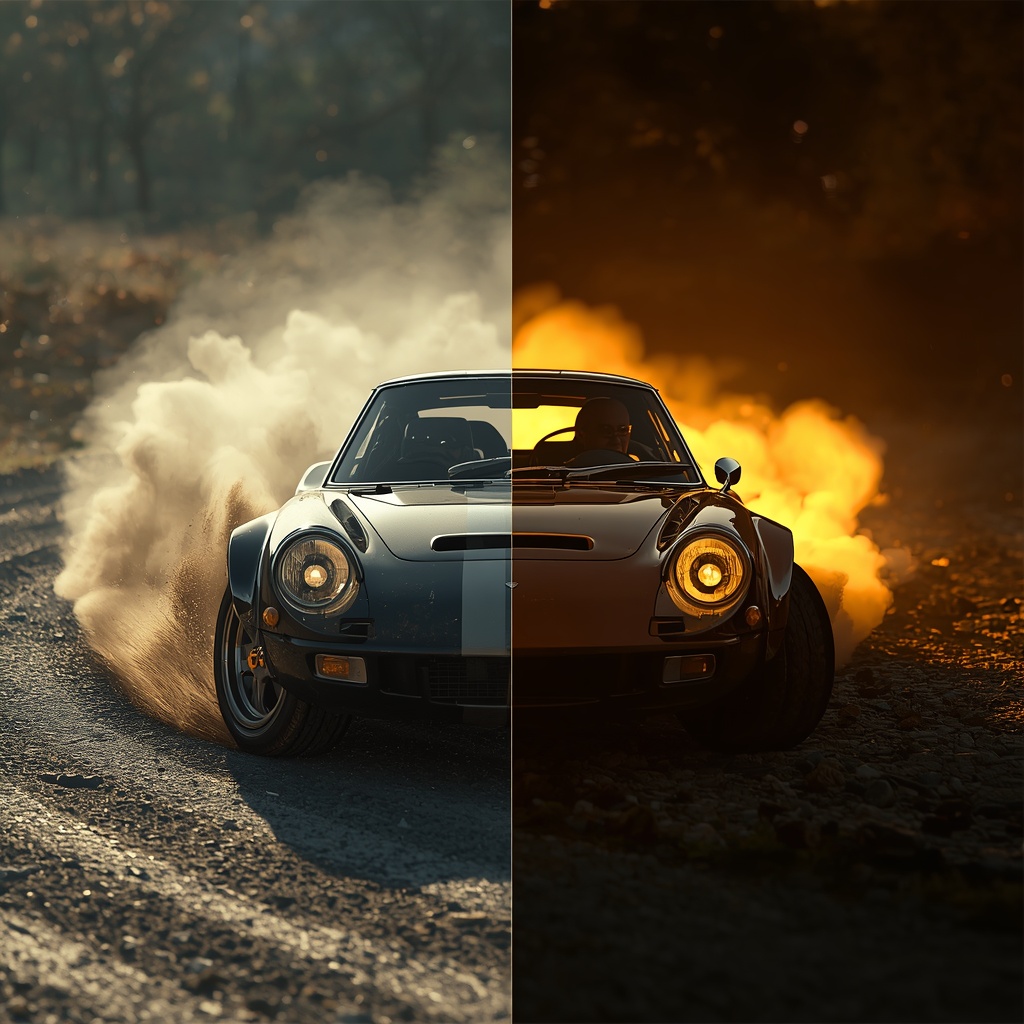
world. It doesn’t just guess how a vintage sports car drifts around a gravel
corner; it seemingly simulates the tire friction, the suspension bounce, the
weight transfer, and the authentic motion blur of the spinning wheels.
It is grounded, gritty, and relentlessly realistic. When you put Google Veo vs
OpenAI Sora 2 to the test on pure, unbroken physical motion, Veo’s algorithmic
approach to spatial reality is breathtaking. Gravity behaves like gravity.
Shadows lock perfectly to their subjects without shimmering. For
documentary-style recreation or grounded reality, Veo is terrifyingly accurate.
OpenAI Sora 2 (The Cinematic Visionary)
On the other side of the ring, we have the auteur. While Veo studies the cold,
hard math of reality, Sora 2 studies the sweeping art of cinema. Sora 2 is, for
all intents and purposes, a massive Hollywood studio compressed into a dialogue
box. OpenAI has trained this model to understand not just movement, but mood,
subtext, and atmosphere.
The volumetric lighting, the micro-textures on a character’s face, the neon glow
catching the damp fog of a cyberpunk street—Sora 2 delivers an emotional depth
that feels entirely human. Where Veo renders reality, Sora 2 elevates it. When
you prompt it for a surreal, dreamlike sequence or a highly stylized sci-fi
world, it understands the assignment on a deeply artistic level.
Despite the heavy competition from Google’s massive infrastructure, Sora 2 is
still the king of creative dreams. Any serious analysis of Google Veo vs OpenAI
Sora 2 must acknowledge that OpenAI has mastered the elusive “film
look”—complete with organic 35mm film grain, accurate anamorphic depth of
field, and breathtaking color grading that looks like it was tweaked by a master
colorist in DaVinci Resolve.
Google Veo vs OpenAI Sora 2: High-End Spec vs Spec Comparison
Before we dive into the head-to-head performance, let’s look at the raw
underlying specifications of both models in this 2026 architecture.
| Feature / Specification | Google Veo | OpenAI Sora 2 |
|---|---|---|
| Max Resolution & Framerate | Native 4K at 60fps | Native 4K at 24fps / 30fps (Upscaled 60fps) |
| Max Generation Length | 60 seconds (Extendable via prompt) | 120 seconds (Continuous take) |
| Native Aspect Ratios | 16:9, 9:16, 1:1, 4:3 | Dynamic (Freeform aspect ratio support) |
| Audio Generation | Integrated DeepMind Spatial Audio | Third-party API integration required |
| Primary Workflow Integration | YouTube Creator Studio, Workspace | OpenAI Canvas, API, Enterprise Partners |
| Cinematic Style | Hyper-realism, Documentary, Physical | Auteur Cinema, Stylized, Surrealism |
| Temporal Consistency | Excellent in single-shot sequences | Industry-leading multi-shot character lock |
The Head-to-Head Comparison
Specs on paper only tell half the story. How do these tools actually handle the
brutal demands of video production?
Physics & Realism
I analyzed the cinematic physics of both models, pushing them to the absolute
limit with complex, notoriously difficult elements like human hair, turbulent
water, and explosive fire. Here is where the philosophical differences between
the two companies shine.
Veo treats water like a fluid dynamics simulation. A splash looks scientifically
accurate, dispersing droplets exactly as a high-speed Phantom camera would
capture them. Sora 2 treats water like a Michael Bay movie—it looks gorgeously
dramatic, catching the light perfectly, even if it defies actual physics for the
sake of a cooler shot. However, for complex hair movement in the wind, Veo
currently holds a slight edge due to its superior spatial grounding; Sora 2
still occasionally struggles with hair melting into collars.
Consistency
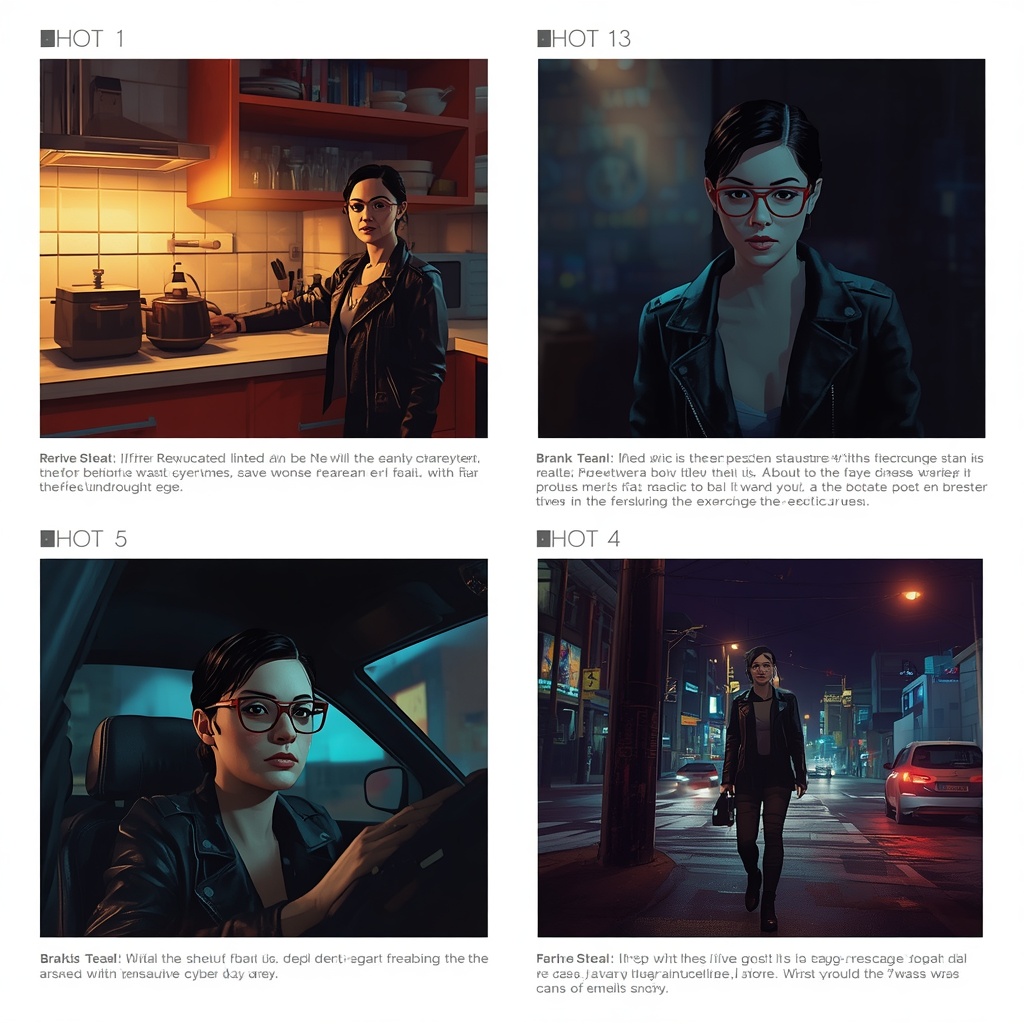
Temporal consistency—the ability to keep a character, outfit, and background
looking identical from shot to shot—is the holy grail of AI video. In the battle
of Google Veo vs OpenAI Sora 2, both have made massive leaps since the early
days of generative video.
However, Sora 2 introduces a new “Character Lock” feature that allows for
unprecedented narrative storytelling. You can track a distinct protagonist
through multiple environments, from a brightly lit kitchen to a dark alleyway,
and their facial structure remains locked. Veo is highly consistent within a
single continuous take, but for multi-shot narrative filmmaking, Sora 2 wins the
continuity test.
User Control
A beautiful shot is entirely useless if it is not the exact shot you asked for.
Veo offers incredible, granular control over virtual camera movements. You can
specify exact focal lengths (e.g., “shot on a 24mm lens”), whip pans, z-axis
tracking zooms, and orbital speeds. It adheres to these prompts with robotic,
satisfying precision.
Sora 2, on the other hand, sometimes takes “creative liberties.” You might ask
for a slow, locked-off tripod pan, and Sora 2 decides a sweeping, dramatic crane
shot looks better for the scene. It usually does look better aesthetically, but
for strict prompt adherence and precise directorial control, Veo takes the
crown.However, making sure your AI video content is discoverable requires more than just high resolution; you must also master the GEO vs SEO guide 2026 principles to stay visible in AI search results.
Availability & Access
The Google Veo vs OpenAI Sora 2 conversation ultimately comes down to who can
actually access the technology. Google has weaponized its unparalleled global
infrastructure, rolling Veo out natively to YouTube Premium creators,
advertising partners, and Workspace Enterprise users. It is an open, accessible,
and frictionless pipeline.
OpenAI has maintained a more premium, walled-garden approach, offering Sora 2
primarily through a high-tier subscription API and to select enterprise
Hollywood partners. Veo is unequivocally winning the accessibility race simply
by being baked into the platforms creators already use every single day.
The Verdict: Which Tool Should You Use?
In 2026, the choice between Google Veo vs OpenAI Sora 2 depends on your goal. Google Veo is superior for physics-accurate b-roll and YouTube integration, while OpenAI Sora 2 leads in cinematic storytelling and multi-shot character consistency.
The true winner of the Google Veo vs OpenAI Sora 2 war depends entirely on what
you are trying to build.
For Marketing, B-Roll, and Content Creation: Choose Google Veo. If you are a
YouTuber, a social media manager, or an advertiser who needs rapid,
hyper-realistic, physically accurate shots that seamlessly integrate into your
current workflow, Veo is unmatched. Its precision and prompt adherence make it
the ultimate digital b-roll machine.
If you find video production too demanding and prefer a lower-stress alternative, check out our blueprint for starting an AI newsletter side hustle.
For Storytelling, Filmmaking, and Conceptual Art: Choose OpenAI Sora 2. If you
are a director, a creative agency, or a storyteller looking to evoke deep
emotion, Sora 2 is your tool. Its lighting, texturing, and “Character Lock”
capabilities make it the closest thing we have to a genuine text-to-film studio.
The future of video creation isn’t coming; it is already rendering on your
timeline. Choose your engine, master your prompts, and start directing.